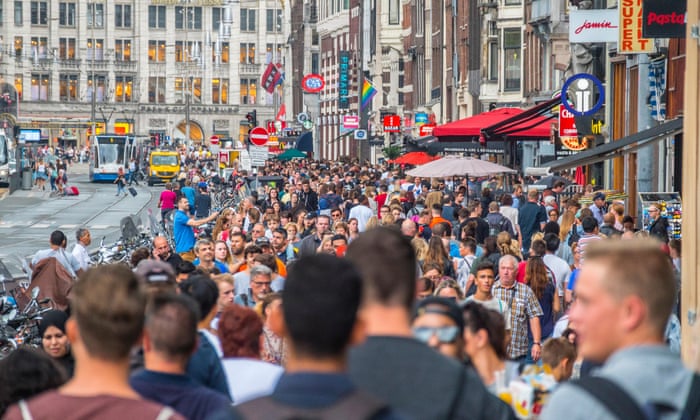
Reflecting back on our trip to Amsterdam as a whole, I learnt a lot. We documented our pictures on our instagram page @ifwamsterdam2019. From our observations of tourists, and everybody on the trip (including ourselves), it was clear that people were more inclined to try things that we wouldn’t at home due to a change in regulations. On reflection, it seems that tourism may be ruining the city. Its history is second to none, and there is so much that goes unnoticed due to people going purely for the sex and drugs aspect.
In the Bulldog CafeOur Research Group
During our time, we experienced both culture and typical tourism. We visited museums, coffee shops, landmarks and nightclubs and got a well rounded experience of Amsterdam. The trip as a whole was amazing, and I think we learnt a lot about tourist morality in the city.
Outside the Dutch Pancake House On the tram to the city centreOn the canal
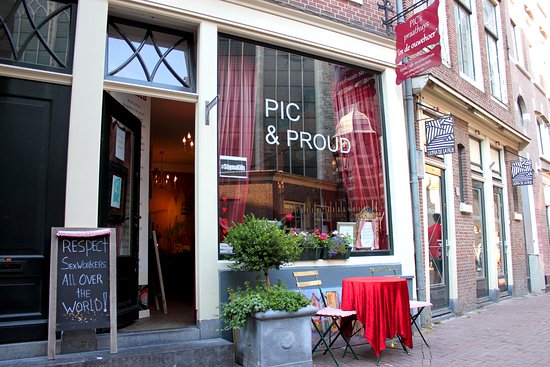
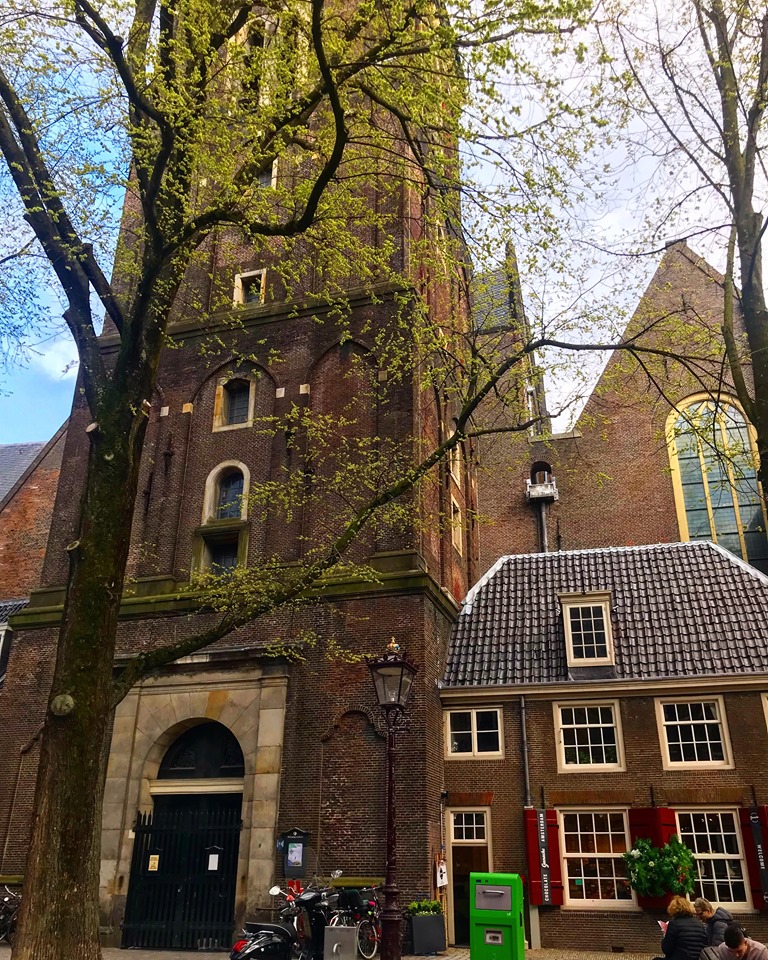
On Monday, the Prostitute Information Centre (PIC) gave us a guided walk of Amsterdam’s Red Light Area. It started outside the centre, which was situated on a square surrounding a church (see pics below). Throughout the duration of the walk, I was mindful of how the sex industry differs in Amsterdam in comparison to the urban tour in Liverpool (see previous blog post).
The Prostitute Information Centre
The church opposite the PIC, and central to the Red Light District
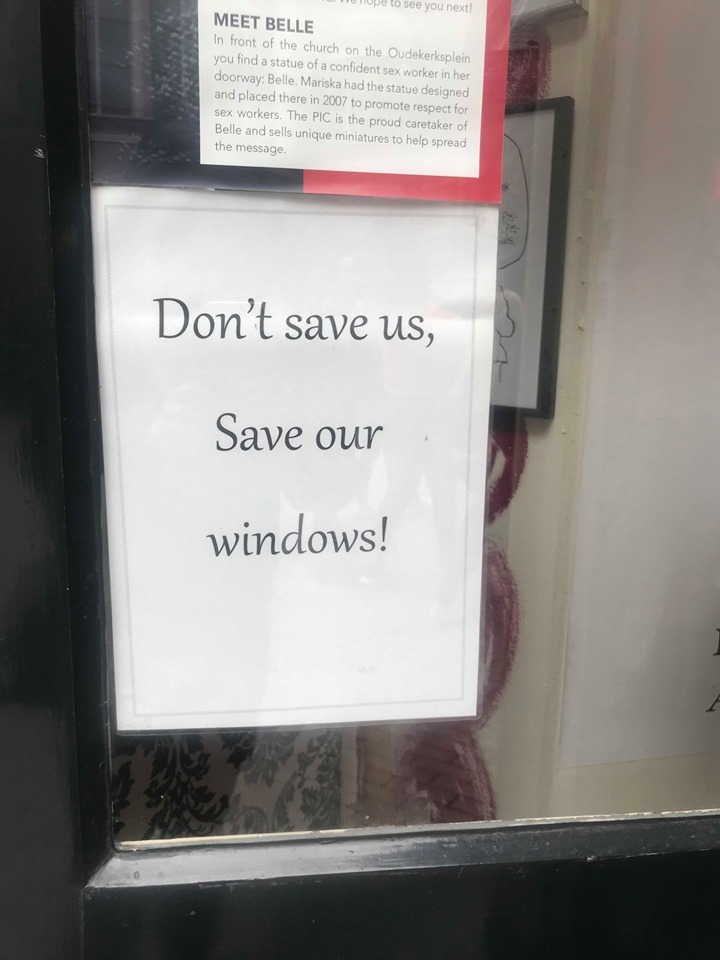
The PIC acts as a support network for sex workers in the area, and just as a generic information centre for tourists visiting the Red Light. The first picture I took was a sign on the door of the centre which read ‘Don’t save us, save our windows’ (see pic below). Instantly, this was a differing attitude to the covertness of Liverpool. Constant rallying from radical feminists and anti-sex work reformers in the area is met with equal rallying from sex workers; the support network for these women was inspiring, and PIC acted as the central network.
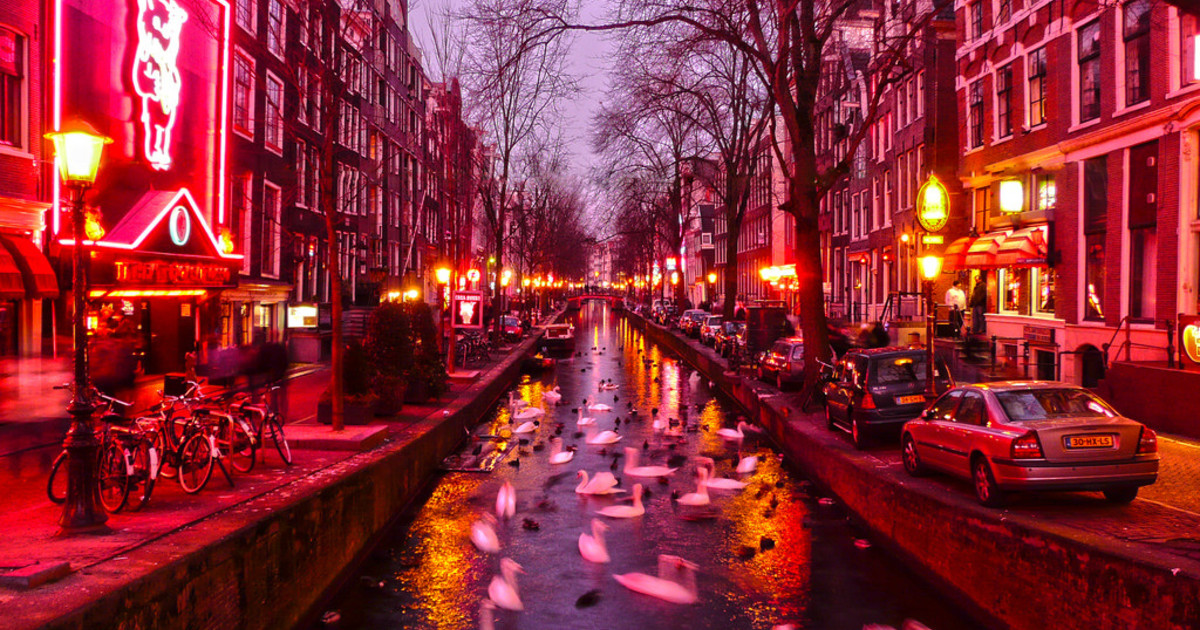
Our guide explained that the reason the Red Light Area surrounds a church was that the sex workers used to work in the graveyards before decriminalisation, as laws didn’t apply in these areas. The area also surrounds canals, as it was primarily sailors who’d been away for a while who used the services of the Red Light. The area had undoubtedly changed since it started operating, and was bright and commercial. This alone was incredibly different from Liverpool’s strip clubs, which were located in discreet areas and all stood in separate areas from one another.
Signage for a live sex show‘Sex Palace’ Live Peep Shows
The tour guide noted the expectations of the women behind the windows: they had to always cover their nipples and genitals whilst stood in the window. This is different from the signs on the peep show where pictures of fully nude women were shown. This reinforces the fact that you can’t wear breasts, but can sell them. Despite this, the main similarity between the girls in Amsterdam and the girls in Liverpool was that their safety is a priority. Both have the ability to negotiate their business in any way they like, and measures are put in place to stop dangerous situations from occurring. However, there were instances of violence against sex workers, as represented by ‘Belle’- a statue outside the PIC resurrected as a sign of respect for all sex workers injured or killed at the hands of their punters.
Belle
The main thing I took from both tours, and one that others should understand, is that a woman’s body is her choice, and no one should take away the liberty to use it how they please.
A few weeks ago, I went on an urban tour of the lap dancing clubs of Liverpool as part of a different module. Having lived in the city for 3 years now, it was shocking to me that these clubs were an almost invisible part of the nightlife, and without actively searching, you’d struggle to find them.
It will be interesting when we go to Amsterdam to compare how the industry presents itself in two different countries, and evaluate what this means to those involved.
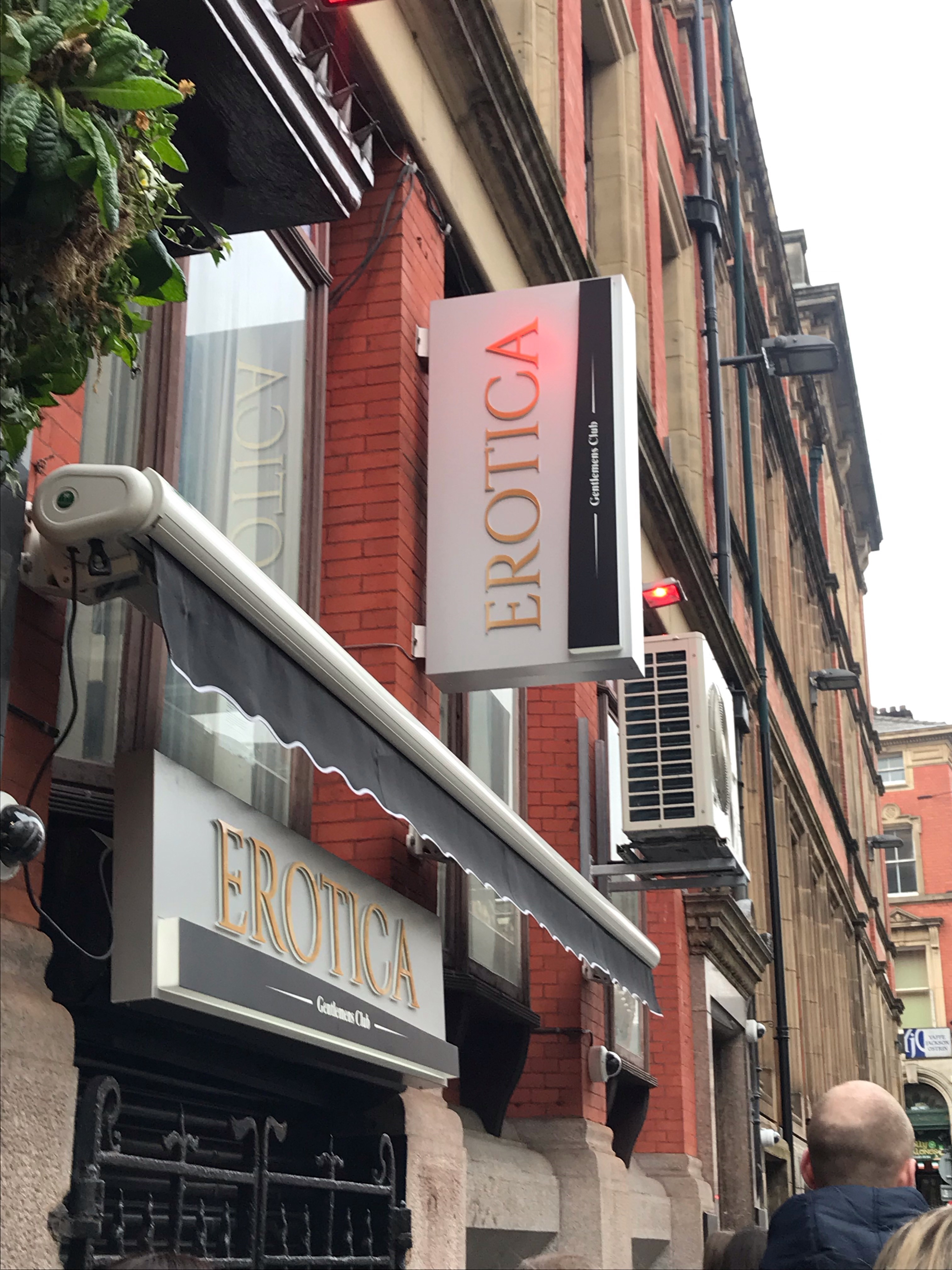
Erotica ‘Gentleman’s Club’
One of the venues, called ‘Erotica’, I’d have probably walked past a thousand times without noticing what it was. The signage is discreet, and could probably be mistaken for an independent shop had it not been for the minuscule lettering that states ‘Gentleman’s Club’ beneath the name. I found the use of the wording here interesting compared to other clubs such as ‘X in the City’ (pictured below), which claims to be ‘Liverpool’s No.1 Lap Dancing Bar’; it’s as if Erotica holds some elitism in the fact that it presents itself more discreetly, and targets ‘Gentlemen’ as oppose to any man.
The Entrance to ‘X in the City’
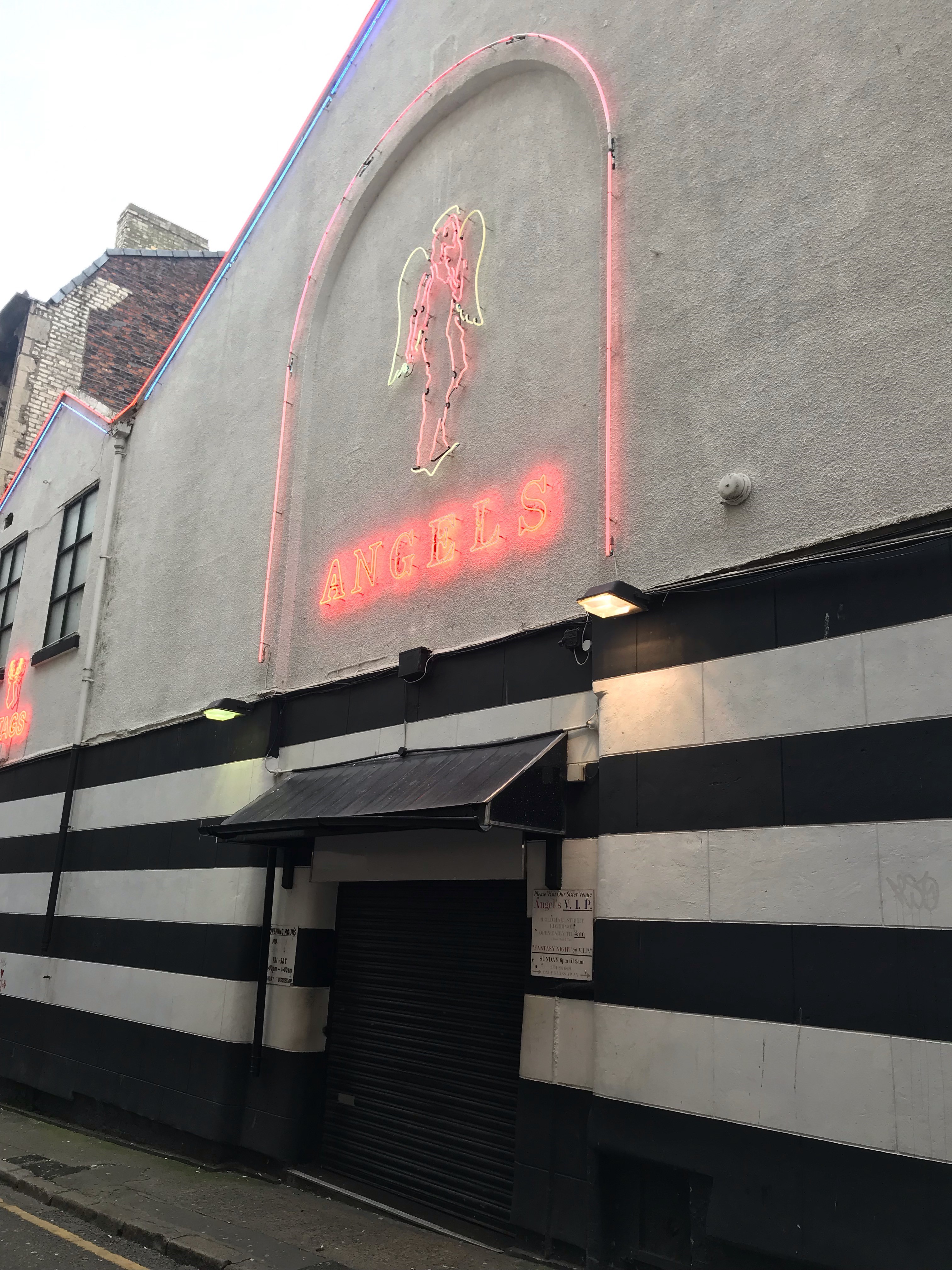
‘X in the City’ was probably the most blatant in the type of establishment it was, and for this I’d say it would be the most similar to what I might see in Amsterdam. However, due to complaints about having a lap dancing bar so public, it had been relocated to a quieter area of the city centre. This is a common theme throughout the tour, with ‘Angels Paradise’ located in Liverpool’s ‘Gay Town’, sandwiched between two well known gay bars. This has a negative effect on business, and the discreetness of the locations mean that they are often overlooked by those on nights out.
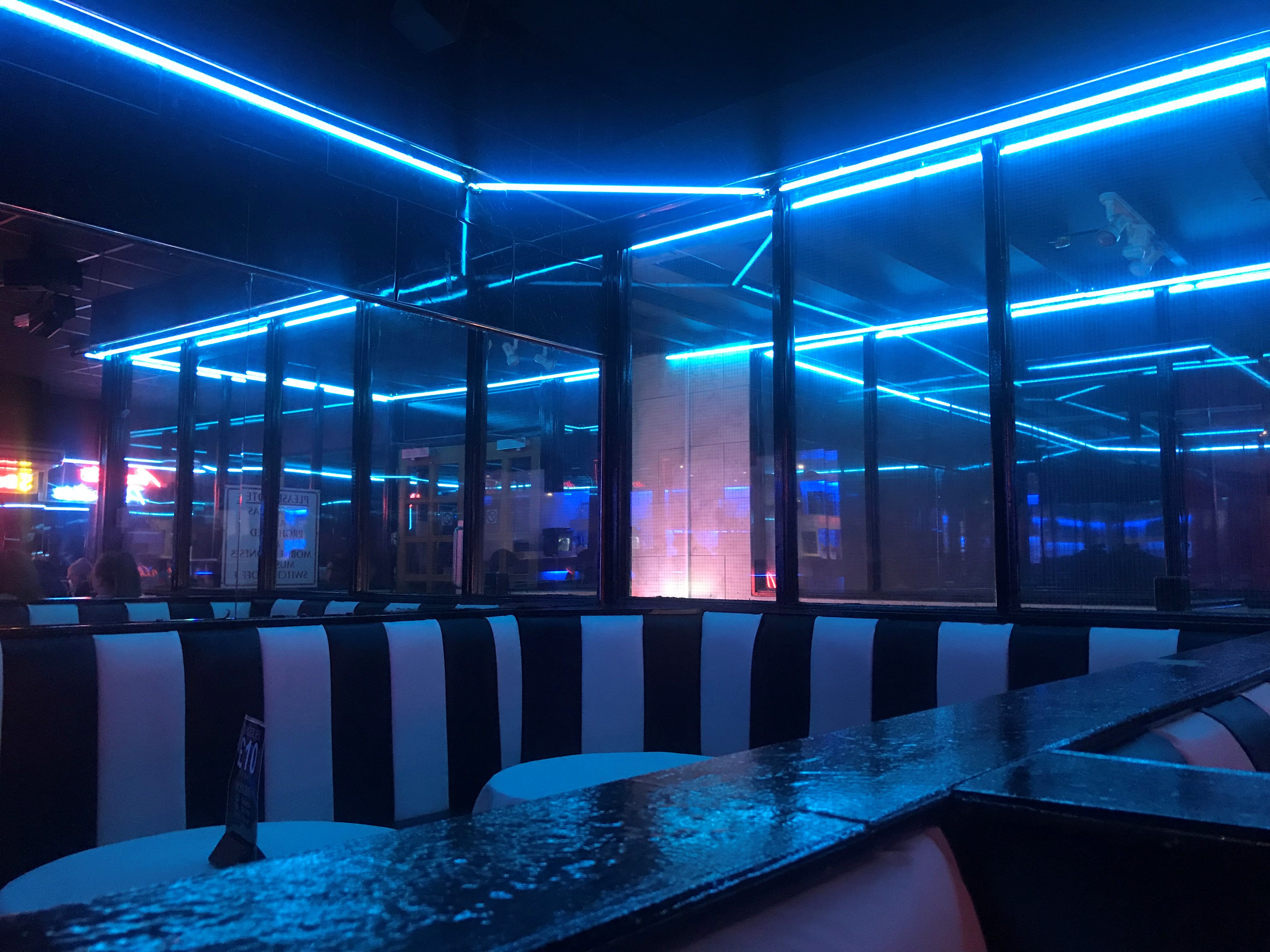
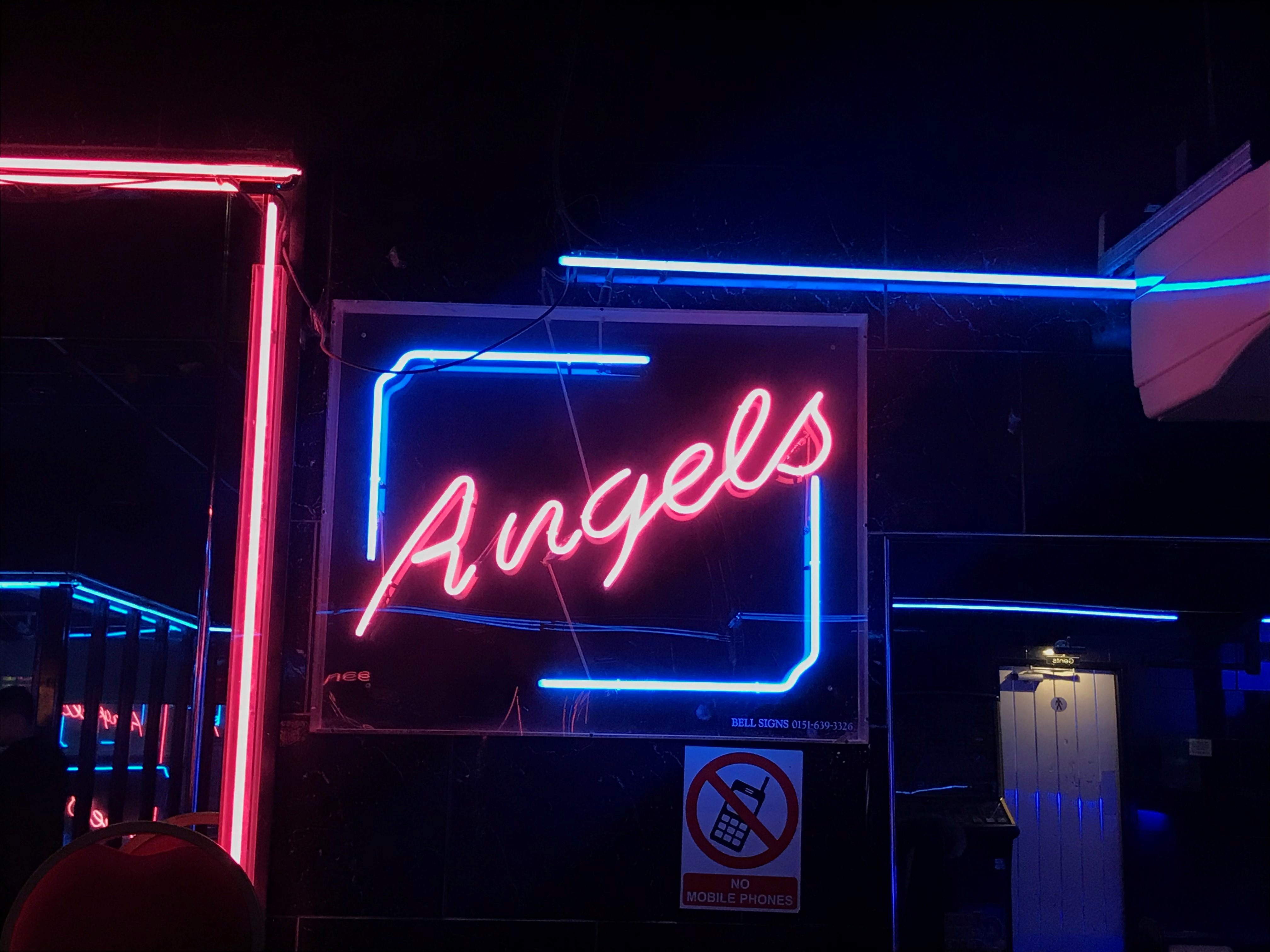
‘Angels Paradise’‘Angels’ From Inside the ClubNeon Sign from Inside ‘Angels’
The fact that the clubs were so hidden is symbolic of a culture that believes an ‘out of sight out of mind’ approach is the best when it comes to the sex industry, which is hugely different to the policy of the Netherlands. The covert status of the lap dancing bars in Liverpool, I believe, will directly contrast those in Amsterdam, from one extreme to another. It will be interesting to see which approach works best, and whether or not the UK can learn a few things from the Dutch.
Exploring previous literature enables us to position our topic in the broader sociological context. Below, I’ve outlined some key findings in two academic sources that I found relevant and interesting.
Chapuis’ (2017) previous research into the tourist culture of Amsterdam has highlighted a distinct infatuation with the Red Light District by those who go for the services, or the ‘accidental’ visitors- those who are attracted by curiosity and claim that a trip to Amsterdam ‘wouldn’t be complete without a little trip through the Red Light District’ (pp.617). Despite the rich culture: the canals, the architecture and the history, the coffee shops and Red Light are consistently the pinnacle of conversation between tourists in the city. It is no secret that sex sells, but to see it presented so honestly as it is in Amsterdam can be a release of moral constraints for tourists. It is this finding in Chapuis’ research that resonates deeply with our own. The acts that carry such stigma in other cultures allow a certain essence of liberation, and so it makes sense that tourists would allow themselves this freedom where the law permits.
Chapuis, A. (2017). Touring the Immoral: Affective Geographies of Visitors to the Amsterdam Red-Light District. Urban Studies. 54 (3), 616-632.
Butcher (2015) has highlighted an emerging consciousness in ethical tourism that could explain a lack of previous literature on the topic. Holidays have always been an unproblematic way to let your hair down and leave your cares behind; a wider sociological awareness means that we now monitor the actions of tourists in other cultures, and so behaviours of holiday goers are seemingly under the telescope. People tend to want more out of holidays nowadays, and so those who do crave mindless escapes are seen to act immorally. In relation to our research, this could mean that the morals of tourists do not change when they enter other more lenient cultures. It may just be that they take advantage of a situation in which they can be care free.
Butcher, J. (2015). Ethical Tourism and Development: The Personal and the Political. Tourism Recreation Research. 40 (1), 71-80.
On March 24th, my group and I will be conducting international fieldwork in Amsterdam. Throughout this journey, from now until after the research, I will be sharing my thoughts and experiences of researching the field.
Despite its beauty and mass of history, Amsterdam is perhaps most well known by its visitors as being the hub of the infamous coffee shops and the Red Light District, and so it crawls with millions of tourists looking to indulge year round. These tourists are at the forefront of our research; we want to find out whether or not our morals adapt due to the laws and unwritten rules of a different culture/society to our own.
Keep checking my blog to stay up to date with the research progress, and make sure you have a look at the blogs of my other group members shown in the menu above!







 Changing Legislation, Changing Morality