Exploring previous literature enables us to position our topic in the broader sociological context. Below, I’ve outlined some key findings in two academic sources that I found relevant and interesting.
Chapuis’ (2017) previous research into the tourist culture of Amsterdam has highlighted a distinct infatuation with the Red Light District by those who go for the services, or the ‘accidental’ visitors- those who are attracted by curiosity and claim that a trip to Amsterdam ‘wouldn’t be complete without a little trip through the Red Light District’ (pp.617). Despite the rich culture: the canals, the architecture and the history, the coffee shops and Red Light are consistently the pinnacle of conversation between tourists in the city. It is no secret that sex sells, but to see it presented so honestly as it is in Amsterdam can be a release of moral constraints for tourists. It is this finding in Chapuis’ research that resonates deeply with our own. The acts that carry such stigma in other cultures allow a certain essence of liberation, and so it makes sense that tourists would allow themselves this freedom where the law permits.
Chapuis, A. (2017). Touring the Immoral: Affective Geographies of Visitors to the Amsterdam Red-Light District. Urban Studies. 54 (3), 616-632.
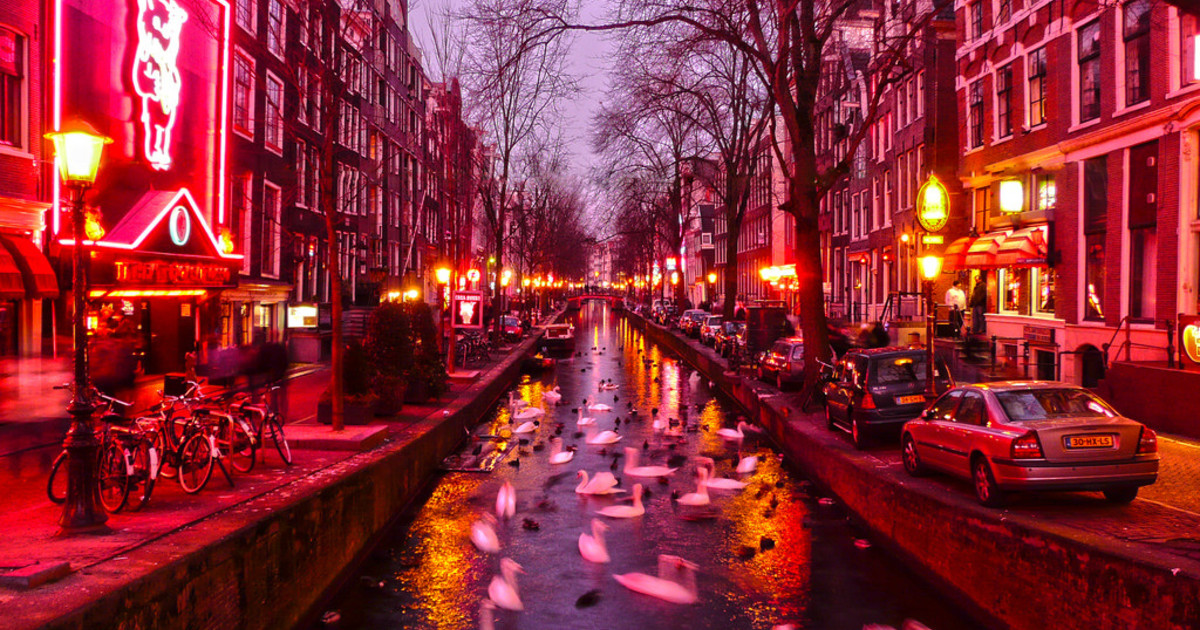
GetYourGuide. (2019). Amsterdam: Red Light District Tour. [online image] Available at: https://www.getyourguide.co.uk/amsterdam-l36/amsterdam-red-light-district-tour-in-german-t66263/ [Accessed 15th Feb 2019]
Butcher (2015) has highlighted an emerging consciousness in ethical tourism that could explain a lack of previous literature on the topic. Holidays have always been an unproblematic way to let your hair down and leave your cares behind; a wider sociological awareness means that we now monitor the actions of tourists in other cultures, and so behaviours of holiday goers are seemingly under the telescope. People tend to want more out of holidays nowadays, and so those who do crave mindless escapes are seen to act immorally. In relation to our research, this could mean that the morals of tourists do not change when they enter other more lenient cultures. It may just be that they take advantage of a situation in which they can be care free.
Butcher, J. (2015). Ethical Tourism and Development: The Personal and the Political. Tourism Recreation Research. 40 (1), 71-80.
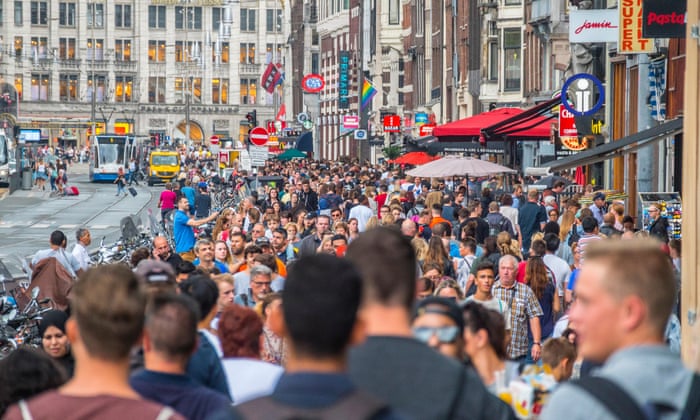
Simmonds, V. (2017). Huge crowd of tourists at famous Damrak street in Amsterdam. [online image] Available at: https://www.theguardian.com/cities/2017/nov/01/amsterdam-tourists-worst [Accessed 15th Feb 2019]

 Changing Legislation, Changing Morality